Daybreak Outdoor Living

CASE STUDY

Add Your Heading Text Here

Tech Stack

Services Rendered

Summary

Daybreak Outdoor Furniture is the premier destination for outdoor furniture that exudes sleek elegance and unbeatable durability.

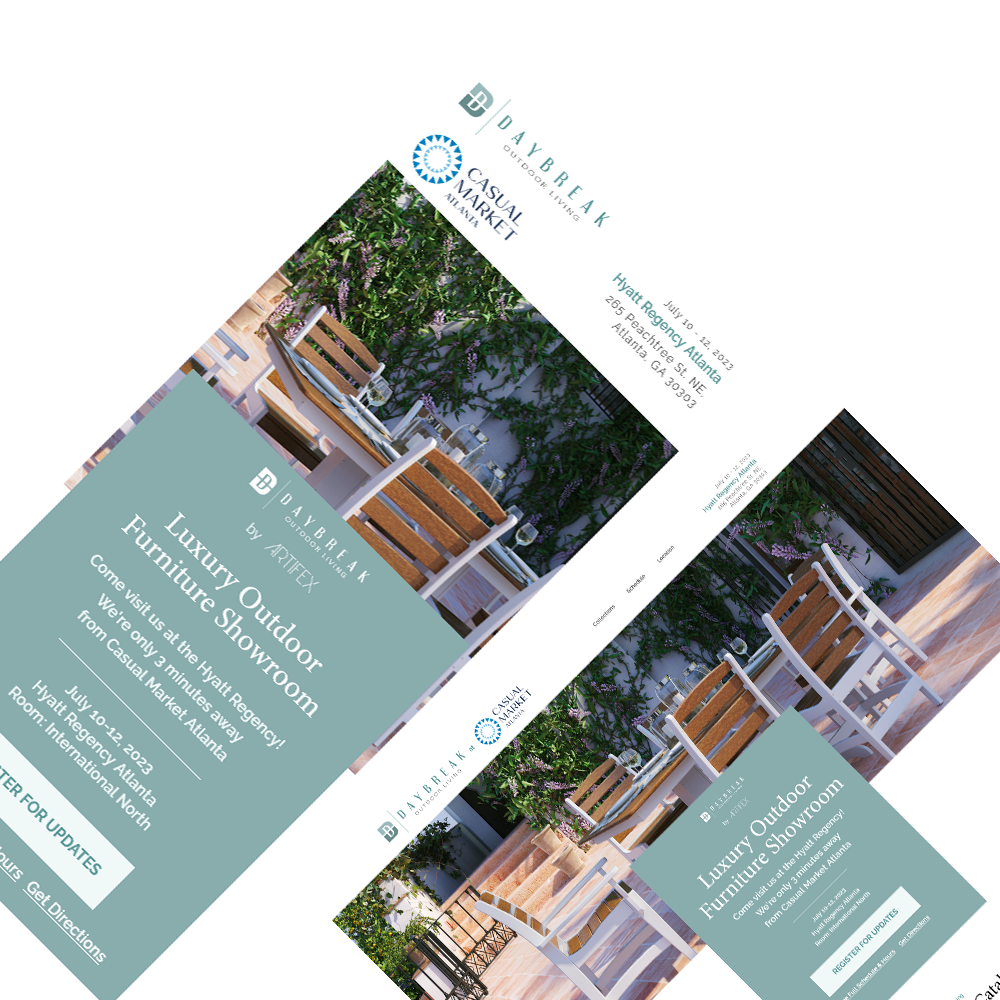
They were having a debut showcase at Casual Market Atlanta for their newest line of luxury outdoor furniture. They needed a landing page that detailed their offerings and an email marketing campaign to drive up attendance

I was contracted through Artifex Marketing to create a website that could attract attendees to their showroom and matched their newly designed website. I was also tasked to create a series of email templates that they could use during the event as well as the marketing campaign structure

Website Design

Key Results

0 %

Site Engagement Rate

0 %

Email Conversion Rate

0 %

Email Open Rate

5/5

We had a very tight time frame and Richard was amazing to work with and made the process go extremely smoothly even with the very tight time frames!

Battery, Energy Storage and Supply Frontier

CASE STUDY

Add Your Heading Text Here

Tech Stack

Services Rendered

Summary

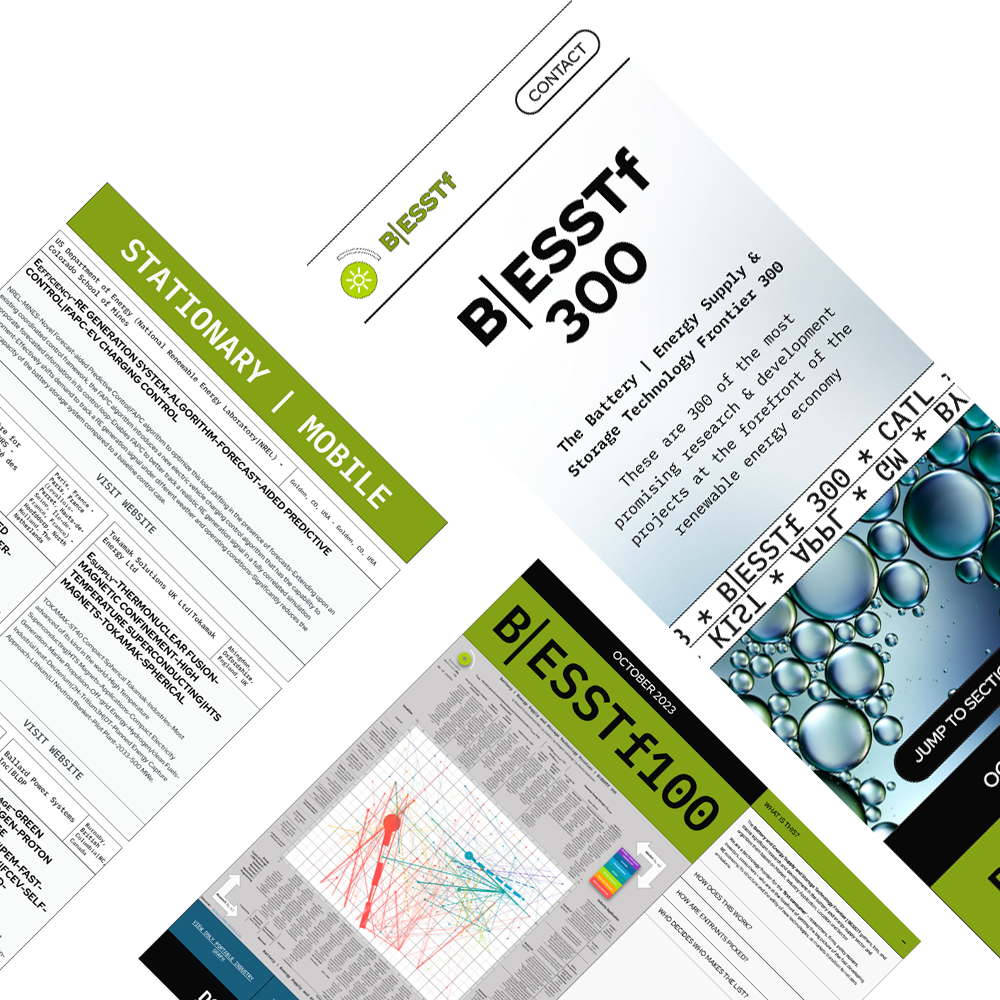
The Battery and Energy Supply and Storage Technology Frontier ( B|ESSTf ) is the forefront of the renewable energy economy.

They gather, list, and track significant research and development in the battery and energy supply sector and organize them based on Market, Industry Application, Location and Sector

I was contracted through Buddy Web Development & Design to create a website that encompasses their ethos and distills these complex concepts and research into a digestible and marketable product that is highly optimized for search engines

Website Design

Casual Gaming

CASE STUDY

Add Your Heading Text Here

Services Rendered

Summary

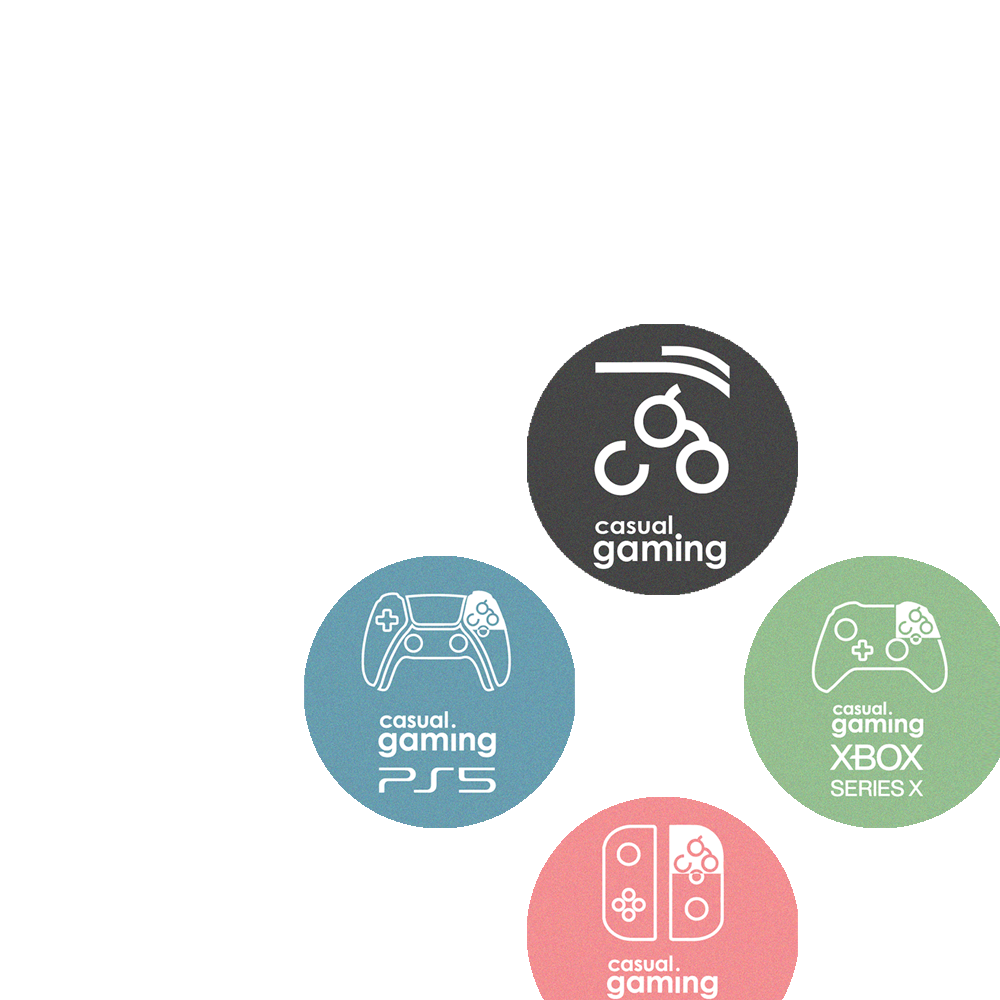
Casual Gaming is a gaming merchandise company that specializes in console skins and gaming cases

I was tasked with creating their logo and brand from the ground up for their upcoming Animal Crossing case launch and this project was a 1 month endeavor that wrapped up in December 2020

The Challenge

The client wanted a logo that looked friendly and approachable for their initial product launch for their line of Animal Crossing switch cases. The launch was to coincide with a social media campaign that was targeting Animal Crossing micro influencers

After our initial consult of business goals, brand values and aesthetics, I began the research process

The Process

I conducted an initial market and competition research into the console skin and gaming merchandise niche.

San serifs and futuristic fonts were common themes. The market design language was very similar to PC gaming aesthetics

Because the entire initial run of product was envisioned as an Animal Crossing accompaniment line, I wanted to do a market assessment for that area as well to key in on their audience

According to Iwata, 56% of Animal Crossing players are female with some versions such as Pocket Camp reaching as high as 80% female. The age demographic of the game is solidly in the 18-35 age bracket

Because of this difference from the general gaming populace, I wanted to cater to the demographic while still being fairly universal. I deep dove into the animal crossing communities and studied cottage core references

Logo Contexts

Solutions

I wanted to explore some serif fonts as it would make them stand out in the marketplace and the general market trend back in 2020 was leaning more into serifs especially for female led brands.

I developed 3 logomarks that hit upon their core values with the last being hyperfocused on Animal Crossing. The core business plan was still in flux whether they would develop beyond the niche, so I wanted to provide different options and flexibility if they decided to focus on the niche

Next, I wanted to do explorations on the gaming market at large. I wanted the logo to be reminiscent of the current logos out there but still distinct and friendly. 

The first option is an exploration into a brand that would be flexible enough to be on PC gaming accesories like logitech.

The second option is a play on the iconic button pad. I wanted to pick apart the iconography and play into the nostalgia while being immediately identifiable.

The client immedietely signed off on the button concept and after several round of iteration and finessing, we got our finished logo and brand guidelines

Results

NYC Office of Neighborhood Safety

CASE STUDY

Add Your Heading Text Here

Tech Stack

Services Rendered

Summary

The Office of Neighborhood Safety (ONS) combines the efforts of the Mayor’s Action Plan for Neighborhood Safety (MAP), the Office to Prevent Gun Violence (OPGV), and Atlas to empower New Yorkers and work with them to pursue community-driven solutions to public safety.

This project was in deep collaboration with Christiana Zafiriadis under her mentorship and Colby Hamilton for guidance. I was tasked with building the website from the ground up and designing the visual language of the web property

Website Design

Key Results

After the successful launch, we did better than other websites in the law & government niche for engagement and page load

0 %

More Session Duration

0 s

Average Page Load Time

The Challenge

This website was extremely challenging for 3 main reasons:

The first being our website was slated to launch in less than a month. This was to coincide with the change in mayors.

The second was that this department was completely new and was the combination of 3 different organizations & departments. As it was in its infancy, there was a lot of discussion as to what the new form of the organization would actually be and approval would be difficult

The third is that this project was meant as a companion piece to several documentary shorts that were not yet completed. As such, the content for the website was also not completed which made design and content needs a very fast moving target

I am extremely grateful for my mentor, Christiana, whose guidance and prior engagement with the departments heavily influenced the direction for the entire project. Her initial design document for their logo development defined tone and direction that cut through the approval process.

The Process

As the time for execution was very short, my process cycle was fast paced. I limited my data collection to our existing properties and consultation with ONS.

I created several modular designs and components on Figma that could get approval before content was made. As there was a large amount of content needed, I collated copy for snippets from pre-existing pages and isolated quotes from advanced screenings of the documentary

Solutions

Tonally, the ask was to be more energetic and fresh than the rest of our web properties. This gave me a bit more freedom to inject more recent web trends into the project but I kept typography and general sections clean and consistent with WCAG standards and web patterns.

Once Figma prototypes got approval, I switched over to  our staging website to cut down on iteration time. I created the base templates for the theme. I pre-loaded, cached and optimized images and video

Results

The entire process took 1 month, culminating in the launch of the new website in December 2021.

Currently, phase 2 is being worked on for deployment

0 s

Average Load Time

0 %

More Session Duration

Showcase

NYC Criminal Justice

CASE STUDY

Add Your Heading Text Here

Tech Stack

Services Rendered

Summary

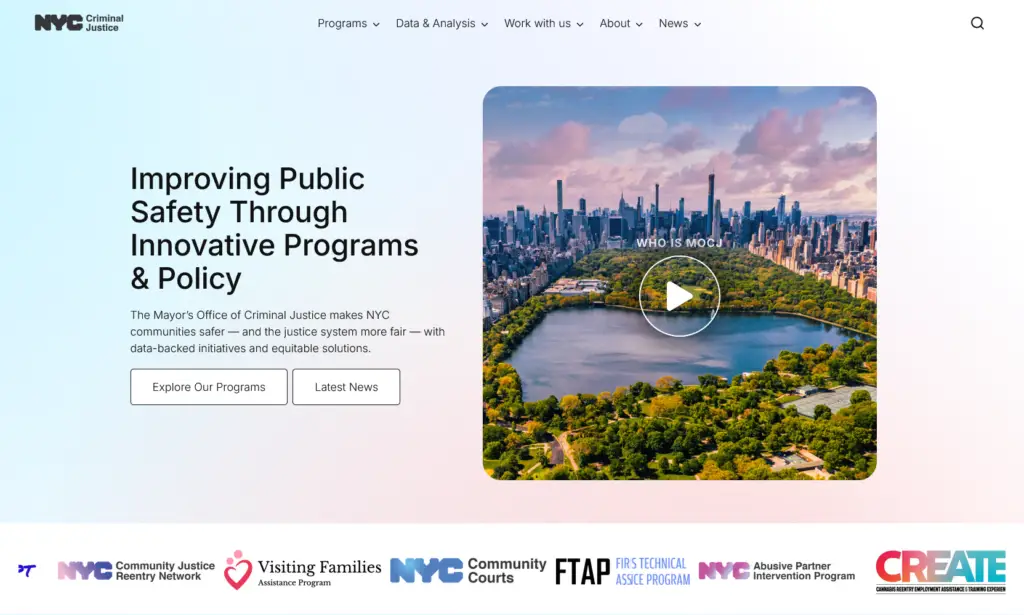
The Mayor’s Office of Criminal Justice (MOCJ) advises the Mayor on all matters relating to the maintenance and improvement of a fair and equitable justice system. Recognizing that public safety cannot be achieved by law enforcement alone, MOCJ brings together community and institutional stakeholders to address the systemic issues that undermine the safety and stability of our neighborhoods.

This project was in deep collaboration with Christiana Zafiriadis under her mentorship. I was tasked with freshening up the website, improving engagement, and improving the backend to match department workflow

Website Redesign

Key Results

0 %

Page Speed Reduction

0 %

New Users Increase

0 %

Increase in Sessions

The Challenge

Old website:

The original website served the department well. It was originally meant to establish the mission statement and the context of the department in the overall vision for criminal justice.

However, after growth and establishment, the homepage was no longer servicing their needs

Key Website Concerns:

  1. The largest issue is that the website didn’t communicate how active the office was despite the amount of work. The majority of the first contentful paint was a mission statement and actual news was hidden behind several clicks
  2. The statistics on the homepage were outdated and unclear on our impact. This also was pulling data from a 3rd party graph animation widget which caused slowdown
  3. The navigation didn’t reflect the most common visited pages of users
  4. The program page wasn’t suited well for scanning. It also heavily depended on the average user knowing what each department did beforehand
  5. The imagery used throughout the website was repetitive and did not align with the intended tone or content of the plan.
  6. The about us page needed a refresh as we were transitioning to new leadership and it needed to be modular as the mission statement was in flux

The Process

After conducting thorough consultations and meetings with department heads and regular maintainers of the website, I commenced the research process to understand user usage patterns. My objective was to align stakeholder needs with  the needs and behaviors of both current and potential users of the website.

To achieve this, I relied on six primary sources of data for my analysis: Google Analytics, Search Console, SEMRush, AnswerThePublic, news articles, and user interviews. My primary focus was on identifying common user pathways, pain points, and attrition areas.

For current users, I collated data on common user pathways through universal analytics tools such as entrance traffic, user flow, and drop-off points. I also analyzed common search queries from sources such as Search Console, SEMRush, and AnswerThePublic, to identify user intent and language usage related to the project.

To further enhance my understanding of user needs, I collated common questions from public meetings, AnswerThePublic, autocomplete form information, and news articles to identify information that was not readily accessible on the website or information that was creating confusion to the average person.

Based on my research, I crafted three distinct user profiles:

Concerned Citizens

These were individuals who had low levels of knowledge about MOCJ. They were concerned about crime statistics in their local neighborhoods. Heavily mobile device reliant

Analysts & Researchers

Regularly interfaces with government agencies and MOCJ. These people had high levels of knowledge of crime and statistics and were looking for data streams or our research releases

Journalists

They were primarily interested in the people behind the scenes. They wanted access to linkable resources and contact resources

For technical issues, I did an assessment through pagespeed insights and waterfall rendering. The website was fairly robust already with just image servicing issues and the aforementioned 3rd party graph tool

With a comprehensive understanding of user needs, I chose to optimize for user engagement, retention and search profile. I commenced the redesign process to align with the overall goals of the project and satisfy the needs of all three user profiles.

Solutions

With deep collaboration with Christiana Zafiriadis and Colby Hamilton, I created mockups using Figma and Photoshop of websites that would match the tone of the existing webpages. I focused my efforts on the most commonly visited pages, the homepage, programs page and about us page.

For the homepage, I created a more compact and news focused above the fold section. For the navigation, I optimized for common user pathways or desire paths.

For the statistics section, I completely took it away and replacd it. These indicators were doing a poor job of communicating our office’s impact while having technical burden and also not servicing our core user groups.

I replaced it with graphical summary sections that highlighted key takeaways from data to make it more easily scannable and link directly to data sources or the programs that are impacting these figures. Using these modular sections also allowed us to explain the nuance behind the numbers or explain the current situation in a context neutral way

Results

The entire process took five months, culminating in the launch of the new website in October 2022.

0 %

Page Speed Reduction

Average page load speed reduction: From 6.8s to 3.8s

0 %

New User Increase

7,393 vs 6,574 new users year over year

0 %

Average Time on Homepage

The time spent on the homepage increased 1:27 vs 0:58

0 %

Session Increase

8,893 vs 8,543 total sessions year over year

Showcase

NYC Office of Crime Victim Supports

CASE STUDY

Add Your Heading Text Here

Services Rendered

Summary

The Office of Crime Victim Supports (OCVS) is the first stand-alone municipal office of its kind in the country. Embedded in the Mayor’s Office of Criminal Justice, OCVS takes a holistic approach to victim services, coordinating existing services to support New York City residents impacted by crime.

I was tasked with creating their logo and brand identity using the NYC design system but incorporating their own design language and core values

Brand Identity & Logo Design

The Challenge

The Office of Crime Victim Supports (OCVS) needed a logo that showed they were a combination of 3 offices & initiatives: The Mayor’s Office to Combat Domestic Violence, The Mayor’s Office to End Domestic and Gender-Based Violence and The Mayor’s Office of Criminal Justice. It was decided early on in the process that they wanted to use the colors, purple, orange and blue to showcase that.

The Process

After conducting thorough consultations with OCVS, I commenced the research process. My main objectives were to understand the current landscape and design language. I gathered logos and marketing materials for organizations related to intimate partner violence and domestic violence. I wanted to make sure I was being thorough and to avoid any biases

Contextually, all NYC logos follow the design document set forth by NYC & Company– the official marketing & tourism organization for the City of New York. I wanted to understand the likely context that the logo would appear next to official government organizations

After research, I decided to iterate several versions to decide on color scheme and get approval. Crucially, I needed to make sure I provided enough options so that the logo and its colors could convey the tone that they envisioned their department to be.

Solutions

Phase 1

For phase 1, I iterated several options based on their chosen color palette. The first 4 had their palette but in different levels of energy and gradient configurations. The last 2 were different palette versions to be simpler or more inclusive.

Typically, I don’t like presenting so many options but this was helpful for 2 main reasons.

  1. I wanted this to be highly collaborative. It got them to think of possibilities and they needed to decide on the tone of their messaging
  2. I’m a cis male who has been lucky enough to not need these services. I wanted to defer to their expertise as much as possible and overcome my biases as much as possible

Phase 2

Initially, they signed off on the first option immediately. The color scheme matched what they were looking for and the jewel and earth tones conveyed the tone they wanted.

However, due to the newly launched Office of Neighborhood Safety, they were concerned the logo was too similar.

Phase 2 is mostly a rethink on how to still remain true to the color palette but distinct enough from the Office of Neighborhood Safety

I played around with different configurations but the concept I honed in the  most on was the first one.

My thought process was that gradients seemed too impersonal so I wanted to add a human touch to it by painting their palette in watercolors. The extra painted texture and the soft brush strokes gave it an extra layer of compassion that I believe is vital to support services. It would also further make their department stand out amongst the other offices and initiatives

Phase 3

They loved the painted version so for the final phase and final approval, I wanted to provide extra context to see it in action. The 3 versions are mostly slight adjustments to saturation to either make it more saturated, jewel-toned or earth-toned

Final Version

They loved and approved the last version. The final step was to vectorize textures, perpare different versions for print, web and socials and prepare brand guidelines

All Ages of Geek

CASE STUDY

Add Your Heading Text Here

Tech Stack

Services Rendered

Summary

All Ages of Geek is a production, entertainment and streaming service that focuses on geek culture content. The company was focused on quickly expanding their offerings and tighten their online presence

My part in the team was lead developer, designer and analyst for their media channels until the end of 2021

Website Redesign

Key Results

The launch of our website was a resounding success. We not only achieved our performance metrics but also surpassed expectations

0 %

Increase in Users

0 %

Pageview Increase

0 %

Bounce Rate Decrease

The Challenge

Old website:

All Ages of Geek is a media company centered around creating geek culture content for all ages. Initially started as a YouTube channel, they quickly expanded their offerings and needed a website that reflected their series.

Their website was initially built on BlueHost’s web builder but it was quickly outgrowing the amount of pages and content allowed.

Design wise, their navigation and website was straightforward but it wasn’t flexible enough to host the amount of content and interests that they wanted to expand into.

They wanted to create a hub of content that was similar to Netflix and RoosterTeeth that could grow with them as they offered more shows and media

The Process

After my initial consultation, I checked their current analytics from Google Analytics, their YouTube channel and their Patreon to understand the demographic of current users of their website

I wanted to improve upon the amount of content people were consuming so I set engagement KPIs and started creating a logical sitemap for their current content so I could plan the backend

On the technical side, their site was extremely slow. This was due to their hosting having up to 30s of response time an average of 24s for rendering. This was unacceptable especially given how young their demographic was and how expectations for a fast experience is. 

I created a roadmap for server migration to address this and set up WordPress as they were familiar with it. I began development and design on a dev server for their v3 website launch prioritizing their most popular content

Solutions

Heavily inspired by Netflix and Roosterteeth, I created the theme for All Ages of Geek. My core design goals were to make the website as unobtrusive as possible but add injections of fun by showcasing their media.

There was also a heavy need to have social integration and convert their audience to Patreon members. The first design is heavily focused on promoting their video content as this was their core offering

For our first phase, we migrated our content to new AWS hosting and kept concurrent websites for the DNS rollout.

Results

The entire process took 1 month, culminating in the launch of the new website in November 2019. With the successful launch, we improved on all of our key metrics when compared to the website performance before

0 %

User Increase

0 %

Pageview Increase

0 %

Bounce Rate Decrease

0 %

More New Users

0 %

More Pages per Session

0 %

Page Speed Reduction

For the phase 4 launch in 2021, we created a new design that focused on their new news articles and podcasts

Showcase

Let’s work together

Schedule a consultation or reach out to discuss opportunities

Email

hiya@richarduy.com

Phone

646-470-7638

NYC Closing Rikers

CASE STUDY

Add Your Heading Text Here

Tech Stack

Services Rendered

Summary

Closing Rikers was a website design and development project aimed at informing the public and government agencies about the closure of Rikers Island. The project involved creating a user-friendly and informative website that would engage and inform the public about the need to close Rikers and reform the criminal justice system.

I was responsible for the design, development, and stakeholder management in close collaboration with Christiana Zafiriadis, Creative Director for the Mayor's Office of Criminal Justice (MOCJ). This project was a partnership between MOCJ, the Department of Corrections, the Department of Design and Construction and community leaders

Website Redesign

Key Results

The launch of our website was a resounding success. We not only achieved our performance metrics but also surpassed expectations

0 %

Page Speed Reduction

0 x

Pageview Increase

0 %

Bounce Rate Decrease

The Challenge

Old website:

The Closing Rikers project is a historic decarceration plan to close the Rikers Island facility and replace it with a smaller network of safer modern jails. This includes dismantling the current Riker facilities and overhauling current borough facilities.

In 2021, post pandemic and amidst protests for crime and reform, The Mayor’s Office for Criminal Justice, Department of Corrections and the Department of Design and Construction collaborated on redesigning the Closing Rikers website.

I was tasked with the design and development of this part of the project.

After close collaborative meetings with stakeholders, we identified several overall goals for the website:

Project goals:

  1. Effectively communicate project status and goals while stopping the spread of misinformation.
  2. Increase the overall search footprint, profile, and traffic of the website
  3. Provide the means for department and community liaisons to post documents and advisories.
  4. Organize meetings and provide areas for community, committee, and board meeting minutes and summaries.
  5. Update and reorganize the old content to better reflect the current status and ongoing initiatives

Key Website Concerns:

  1. The website suffered from an overly condensed layout that resulted in an overwhelming amount of information and hindered content discoverability.
  2. The responsive and mobile version of the website was virtually unusable due to bugs
  3. The documents were either excessively loaded on the homepage or buried deep within their respective committee pages, often requiring significant scrolling to locate the desired document.
  4. The absence of a search function on the website limited the user’s ability to quickly and efficiently find relevant content.
  5. The imagery used throughout the website was repetitive and did not align with the intended tone or content of the plan.
  6. From a technical standpoint, the website contained render-blocking tracking and translation code and large, unoptimized images (some as large as 100 MB per header). Although the server responses and processing were prompt, the webpage often took a minimum of 5 seconds to load initially and up to 30 seconds to fully render.

The Process

After conducting thorough consultations with the Department of Corrections (DOC), Department of Design and Construction (DDC), Mayor’s Office of Criminal Justice (MOCJ), and Community Liaisons, I commenced the research process. My objective was to gain insight into stakeholder needs and departmental goals, while also seeking to understand the needs and behaviors of both current and potential users of the website.

To achieve this, I relied on six primary sources of data for my analysis: Google Analytics, Search Console, SEMRush, AnswerThePublic, news articles, and user interviews. My primary focus was on identifying common user pathways, pain points, and attrition areas.

For current users, I collated data on common user pathways through universal analytics tools such as entrance traffic, user flow, and drop-off points. I also analyzed common search queries from sources such as Search Console, SEMRush, and AnswerThePublic, to identify user intent and language usage related to the project.

To further enhance my understanding of user needs, I collated common questions from public meetings, AnswerThePublic, autocomplete form information, and news articles to identify information that was not readily accessible on the website or information that was creating confusion to the average person.

Based on my research, I crafted three distinct user profiles:

Officials

This included members of government, NGOs, academia, and community organizations, who were our most frequent users

Concerned Citizens

These were individuals who had low levels of knowledge about the project. They were concerned about the issues and how they affected their local neighborhoods.

Activated Citizens

These were ordinary individuals who were keen to get involved with the project either by contributing or attending meetings.

To address any possible issues, I conducted a site audit through pagespeed insights and server logs, followed by a waterfall analysis of the call tree and page rendering.

With a comprehensive understanding of user needs, I chose to optimize for user engagement, retention and search profile. I commenced the redesign process to align with the overall goals of the project and satisfy the needs of all three user profiles.

Solutions

In terms of organization and content, I conducted an assessment of our existing content on both our websites and published documents. I proceeded to create a new sitemap and reorganized the content to improve its navigability and enhance search engine optimization. I also refined the language used in the content to make it more accessible to our audience. I drew from our design documents to flesh out the website’s pages and provided clear and direct answers to common user questions. I allocated designated areas on the website for important documents and meetings, and developed reusable components for these areas where possible.

With deep collaboration with Christiana Zafiriadis and Colby Hamilton, I created mockups using Figma and Photoshop of websites that would match the tone of the community spaces that the new facilities would have as well as the friendlier tone. A big issue with this project is the lack of images due to this being a future project. We did not want to present these as already built projects

The concept images from the publicly approved documents were too low resolution to be used on the website and contained stock images of people. On top of that, the design and architect firms that created the documents would have added another layer of complexity and budget on top of government approval processes. I needed to utilize already approved images given the short timeline but also evoke the sense of warmth and community that we wanted the project to have

I solved this issue by using an AI and feeding it upscaled versions of our pictures. From there, I wanted to evoke the sense of warmth, hope and community so I mimicked impressionist paintings for the dreamlike and warm tone. I was able to create high resolution pictures and avoid the majority of the re-approval process this way

On the technical side, I developed a custom theme for the website and optimized the delivery of all assets. To enhance website performance, I async loaded most files and incorporated auto image optimization into the website’s workflow, which was dependent on custom post types. I also created different roles for community liaisons to make changes on the website and upload their documents. Since the project needed to be flexible, I also included a page builder in the website’s development process.

Results

The entire process took five months, culminating in the launch of the new website in February 2022. With the successful launch, we improved on all of our key metrics when compared to the average government websites and our past results from the previous year

0 %

Page Speed Reduction

Average page load speed reduction: From 15s to 3s

0 x

Pageview Increase

6,927 vs 3,303 or 47% more than comparable government websites

0 %

Bounce Rate Decrease

From 95% to 61% or 5% less than comparable sites

0 %

More New Users

We increased our new users from 2,890 vs 1,846 year over year

0 %

Average Session Duration

From an average of 14s to 1:20

0

Average Search Result Position

The average SERP was raised from 10.5 to 9.4 in the 3 months after launch

We also vastly improved our technical rollout despite having 4x or 5x the amount of content and information

Showcase

Central Park Dentists

CASE STUDY

Add Your Heading Text Here

Summary

For over 30 years, Dr. Levingart and family have run their New York dental practice that stayed at the forefront of modern dental practices from laser dentistry to 3D printing implants. They needed a brand and website refresh to match their hundreds of 5 star reviews​

Tech Stack

Services Rendered

Deliverables

Key Results

0 %

Increase in Users

From 2,087 vs 1,374 users in 2020 to 2019

0 %

Pageview Increase

From 4,957 vs 2,195 page views in 2020 to 2019

0 %

Bounce Rate Decrease

From 57.94% vs 82.65% in 2020 to 2019

0 %

More Pages per Session

2.01 vs 1.27 pages per session in 2020 to 2019

0 %

Increase in Average Session Duration

00:01:14 vs 00:00:44 in 2020 to 2019

5/5
“Richard is a pleasure to work with! Incredibly helpful, honest and straightfoward about what needs to be done and how it can be achieved. Looking forward to continue working together!”

Original Website 2018

Redesign

Socials

Original Logo 2018

Logo Concepts

Further Exploration

Final Logo

Let’s work together

Schedule a consultation or reach out to discuss opportunities

Email

hiya@richarduy.com

Phone

646-470-7638

Gay-Nerds.com

Add Your Heading Text Here

Created back in 2010, Gay-Nerds.com is a geek culture website for LGBTQIA+ nerds, dorks and everything in between. I created this pet project mainly because I didn't see a lot LGBTQIA+ voices represented in geek culture back then. It was a large endeavor that spanned from website development to content creation and marketing and we were featured in places like Kotaku and Queerty.

Tech Stack

Services Rendered

Deliverables

Over its lifetime, Gay-Nerds.com served 5.3M Pageviews & 900k users while maintaining a bounce rate of under 20%. We interviewed people from Margaret Cho, to X-Men Editor Daniel Ketchum, to Rupaul’s Drag Race queen Phi Phi O’ Hara to Fallout: New Vegas Producer, Tess Treadwell.

Not bad for a ragtag team of determined ‘mos

First Iteration circa 2010

Logo Evolution

Gay-Nerds.com circa 2014-2019

Gay-Nerds.com circa 2011-2014