Pokemon Bouquets

ILLUSTRATIONS

Add Your Heading Text Here

MEDIUM

Summary

This is a collection of watercolor bouquets of the Kanto starter Pokemon. I wanted each flower arrangement to be inspired by the Pokemon: Bulbasaur is inspired by lil' succulents; Charmander is a fall berry bouquet; and Squirtle is a joyful summer burst.

Watercolor Pet Series

ILLUSTRATIONS

Add Your Heading Text Here

MEDIUM

Summary

This is a collection of commissions and assorted work of people's pets. The assorted watercolor portraits are a celebration of their personality and others are commemorative pieces of the beloved memories between the owner and their friend

If you have a pet, don't forget to give them a hug

Hokusai X Pokemon

ILLUSTRATIONS

Add Your Heading Text Here

MEDIUM

Summary

Inspired by the works of Hokusai, I wanted to recreate two of the most iconic Pokemon: Gyarados and Milotic. I wanted to evoke Power & Strength and Beauty & Resilience by using "The Great Wave off of Kanagawa" and "A Tour of the Waterfalls of the Provinces" as starting points.

All Ages of Geek

CASE STUDY

Add Your Heading Text Here

Tech Stack

Services Rendered

Summary

All Ages of Geek is a production, entertainment and streaming service that focuses on geek culture content. The company was focused on quickly expanding their offerings and tighten their online presence

My part in the team was lead developer, designer and analyst for their media channels until the end of 2021

Website Redesign

Key Results

The launch of our website was a resounding success. We not only achieved our performance metrics but also surpassed expectations

0 %

Increase in Users

0 %

Pageview Increase

0 %

Bounce Rate Decrease

The Challenge

Old website:

All Ages of Geek is a media company centered around creating geek culture content for all ages. Initially started as a YouTube channel, they quickly expanded their offerings and needed a website that reflected their series.

Their website was initially built on BlueHost’s web builder but it was quickly outgrowing the amount of pages and content allowed.

Design wise, their navigation and website was straightforward but it wasn’t flexible enough to host the amount of content and interests that they wanted to expand into.

They wanted to create a hub of content that was similar to Netflix and RoosterTeeth that could grow with them as they offered more shows and media

The Process

After my initial consultation, I checked their current analytics from Google Analytics, their YouTube channel and their Patreon to understand the demographic of current users of their website

I wanted to improve upon the amount of content people were consuming so I set engagement KPIs and started creating a logical sitemap for their current content so I could plan the backend

On the technical side, their site was extremely slow. This was due to their hosting having up to 30s of response time an average of 24s for rendering. This was unacceptable especially given how young their demographic was and how expectations for a fast experience is. 

I created a roadmap for server migration to address this and set up WordPress as they were familiar with it. I began development and design on a dev server for their v3 website launch prioritizing their most popular content

Solutions

Heavily inspired by Netflix and Roosterteeth, I created the theme for All Ages of Geek. My core design goals were to make the website as unobtrusive as possible but add injections of fun by showcasing their media.

There was also a heavy need to have social integration and convert their audience to Patreon members. The first design is heavily focused on promoting their video content as this was their core offering

For our first phase, we migrated our content to new AWS hosting and kept concurrent websites for the DNS rollout.

Results

The entire process took 1 month, culminating in the launch of the new website in November 2019. With the successful launch, we improved on all of our key metrics when compared to the website performance before

0 %

User Increase

0 %

Pageview Increase

0 %

Bounce Rate Decrease

0 %

More New Users

0 %

More Pages per Session

0 %

Page Speed Reduction

For the phase 4 launch in 2021, we created a new design that focused on their new news articles and podcasts

Showcase

Let’s work together

Schedule a consultation or reach out to discuss opportunities

Email

hiya@richarduy.com

Phone

646-470-7638

NYC Closing Rikers

CASE STUDY

Add Your Heading Text Here

Tech Stack

Services Rendered

Summary

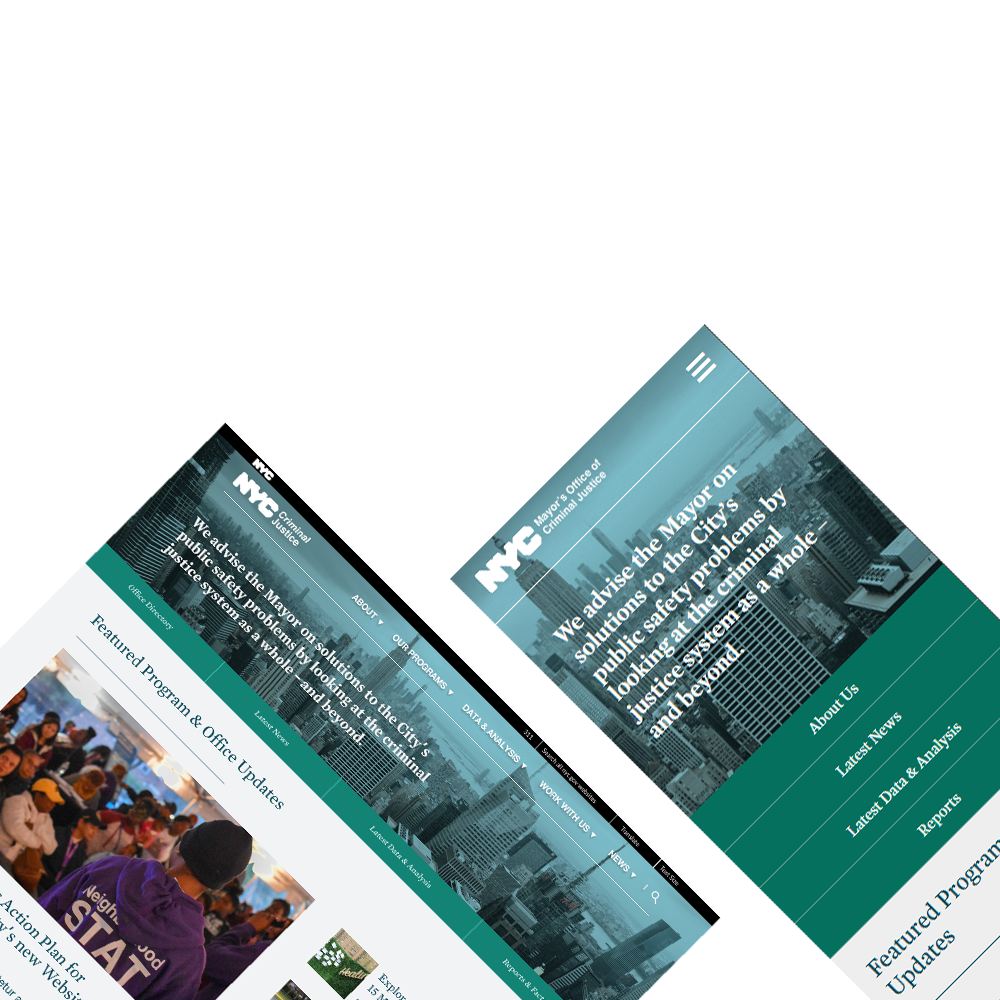
Closing Rikers was a website design and development project aimed at informing the public and government agencies about the closure of Rikers Island. The project involved creating a user-friendly and informative website that would engage and inform the public about the need to close Rikers and reform the criminal justice system.

I was responsible for the design, development, and stakeholder management in close collaboration with Christiana Zafiriadis, Creative Director for the Mayor's Office of Criminal Justice (MOCJ). This project was a partnership between MOCJ, the Department of Corrections, the Department of Design and Construction and community leaders

Website Redesign

Key Results

The launch of our website was a resounding success. We not only achieved our performance metrics but also surpassed expectations

0 %

Page Speed Reduction

0 x

Pageview Increase

0 %

Bounce Rate Decrease

The Challenge

Old website:

The Closing Rikers project is a historic decarceration plan to close the Rikers Island facility and replace it with a smaller network of safer modern jails. This includes dismantling the current Riker facilities and overhauling current borough facilities.

In 2021, post pandemic and amidst protests for crime and reform, The Mayor’s Office for Criminal Justice, Department of Corrections and the Department of Design and Construction collaborated on redesigning the Closing Rikers website.

I was tasked with the design and development of this part of the project.

After close collaborative meetings with stakeholders, we identified several overall goals for the website:

Project goals:

  1. Effectively communicate project status and goals while stopping the spread of misinformation.
  2. Increase the overall search footprint, profile, and traffic of the website
  3. Provide the means for department and community liaisons to post documents and advisories.
  4. Organize meetings and provide areas for community, committee, and board meeting minutes and summaries.
  5. Update and reorganize the old content to better reflect the current status and ongoing initiatives

Key Website Concerns:

  1. The website suffered from an overly condensed layout that resulted in an overwhelming amount of information and hindered content discoverability.
  2. The responsive and mobile version of the website was virtually unusable due to bugs
  3. The documents were either excessively loaded on the homepage or buried deep within their respective committee pages, often requiring significant scrolling to locate the desired document.
  4. The absence of a search function on the website limited the user’s ability to quickly and efficiently find relevant content.
  5. The imagery used throughout the website was repetitive and did not align with the intended tone or content of the plan.
  6. From a technical standpoint, the website contained render-blocking tracking and translation code and large, unoptimized images (some as large as 100 MB per header). Although the server responses and processing were prompt, the webpage often took a minimum of 5 seconds to load initially and up to 30 seconds to fully render.

The Process

After conducting thorough consultations with the Department of Corrections (DOC), Department of Design and Construction (DDC), Mayor’s Office of Criminal Justice (MOCJ), and Community Liaisons, I commenced the research process. My objective was to gain insight into stakeholder needs and departmental goals, while also seeking to understand the needs and behaviors of both current and potential users of the website.

To achieve this, I relied on six primary sources of data for my analysis: Google Analytics, Search Console, SEMRush, AnswerThePublic, news articles, and user interviews. My primary focus was on identifying common user pathways, pain points, and attrition areas.

For current users, I collated data on common user pathways through universal analytics tools such as entrance traffic, user flow, and drop-off points. I also analyzed common search queries from sources such as Search Console, SEMRush, and AnswerThePublic, to identify user intent and language usage related to the project.

To further enhance my understanding of user needs, I collated common questions from public meetings, AnswerThePublic, autocomplete form information, and news articles to identify information that was not readily accessible on the website or information that was creating confusion to the average person.

Based on my research, I crafted three distinct user profiles:

Officials

This included members of government, NGOs, academia, and community organizations, who were our most frequent users

Concerned Citizens

These were individuals who had low levels of knowledge about the project. They were concerned about the issues and how they affected their local neighborhoods.

Activated Citizens

These were ordinary individuals who were keen to get involved with the project either by contributing or attending meetings.

To address any possible issues, I conducted a site audit through pagespeed insights and server logs, followed by a waterfall analysis of the call tree and page rendering.

With a comprehensive understanding of user needs, I chose to optimize for user engagement, retention and search profile. I commenced the redesign process to align with the overall goals of the project and satisfy the needs of all three user profiles.

Solutions

In terms of organization and content, I conducted an assessment of our existing content on both our websites and published documents. I proceeded to create a new sitemap and reorganized the content to improve its navigability and enhance search engine optimization. I also refined the language used in the content to make it more accessible to our audience. I drew from our design documents to flesh out the website’s pages and provided clear and direct answers to common user questions. I allocated designated areas on the website for important documents and meetings, and developed reusable components for these areas where possible.

With deep collaboration with Christiana Zafiriadis and Colby Hamilton, I created mockups using Figma and Photoshop of websites that would match the tone of the community spaces that the new facilities would have as well as the friendlier tone. A big issue with this project is the lack of images due to this being a future project. We did not want to present these as already built projects

The concept images from the publicly approved documents were too low resolution to be used on the website and contained stock images of people. On top of that, the design and architect firms that created the documents would have added another layer of complexity and budget on top of government approval processes. I needed to utilize already approved images given the short timeline but also evoke the sense of warmth and community that we wanted the project to have

I solved this issue by using an AI and feeding it upscaled versions of our pictures. From there, I wanted to evoke the sense of warmth, hope and community so I mimicked impressionist paintings for the dreamlike and warm tone. I was able to create high resolution pictures and avoid the majority of the re-approval process this way

On the technical side, I developed a custom theme for the website and optimized the delivery of all assets. To enhance website performance, I async loaded most files and incorporated auto image optimization into the website’s workflow, which was dependent on custom post types. I also created different roles for community liaisons to make changes on the website and upload their documents. Since the project needed to be flexible, I also included a page builder in the website’s development process.

Results

The entire process took five months, culminating in the launch of the new website in February 2022. With the successful launch, we improved on all of our key metrics when compared to the average government websites and our past results from the previous year

0 %

Page Speed Reduction

Average page load speed reduction: From 15s to 3s

0 x

Pageview Increase

6,927 vs 3,303 or 47% more than comparable government websites

0 %

Bounce Rate Decrease

From 95% to 61% or 5% less than comparable sites

0 %

More New Users

We increased our new users from 2,890 vs 1,846 year over year

0 %

Average Session Duration

From an average of 14s to 1:20

0

Average Search Result Position

The average SERP was raised from 10.5 to 9.4 in the 3 months after launch

We also vastly improved our technical rollout despite having 4x or 5x the amount of content and information

Showcase

Cartographer Games

CASE STUDY

Add Your Heading Text Here

Services Rendered

Summary

This was a videogame concept and website that was developed for the international UNESCO MGIEP 2015 gaming challenge and placed as one of the final 5 out of entries from 36 countries.

Every year, thousands of satellite images of disaster areas and unmapped areas need to be processed for aid or data collection. Cartographer would crowdsource the processing of these images through incentivized gaming.

Unfortunately, the game did not qualify for the final round of funding so it was not fully developed beyond the website and app interface